

Updated October 2026
Tape-in vs hand-tied extensions comes down to one question: do you want the quickest, flattest option, or the most volume? Tape-ins are fast to put in, sit very flat and suit most hair types, including fine hair. Hand-tied wefts add more fullness in fewer rows and use no glue or heat, but they need a bit more natural hair to sit on.
Both are semi-permanent, both use real human hair, and both need a move-up every 6 to 8 weeks. This guide from the extension team at Capelli Salon walks you through the real differences, so you can pick the one that fits your hair and your life.
Tape-In vs Hand-Tied at a Glance
| Tape-in extensions | Hand-tied wefts | |
|---|---|---|
| How they attach | Thin panels with adhesive, pressed on either side of a small section of your hair | Fine wefts sewn onto a row of small beads, with no glue or heat |
| Best for | Fine to medium hair, natural length and volume | Medium to thick hair, lots of volume |
| Feel | Very flat and light | Soft and light, with a small row at each base |
| Appointment time | Usually the quickest salon method | Takes longer, because each row is sewn in |
| Move-ups | About every 6 to 8 weeks | About every 6 to 8 weeks |
| Can the hair be reused? | Often, with fresh tape | Often, for several rounds |
These are general guides. Your stylist will recommend what suits your hair after looking at it in person.
How Tape-In Extensions Work
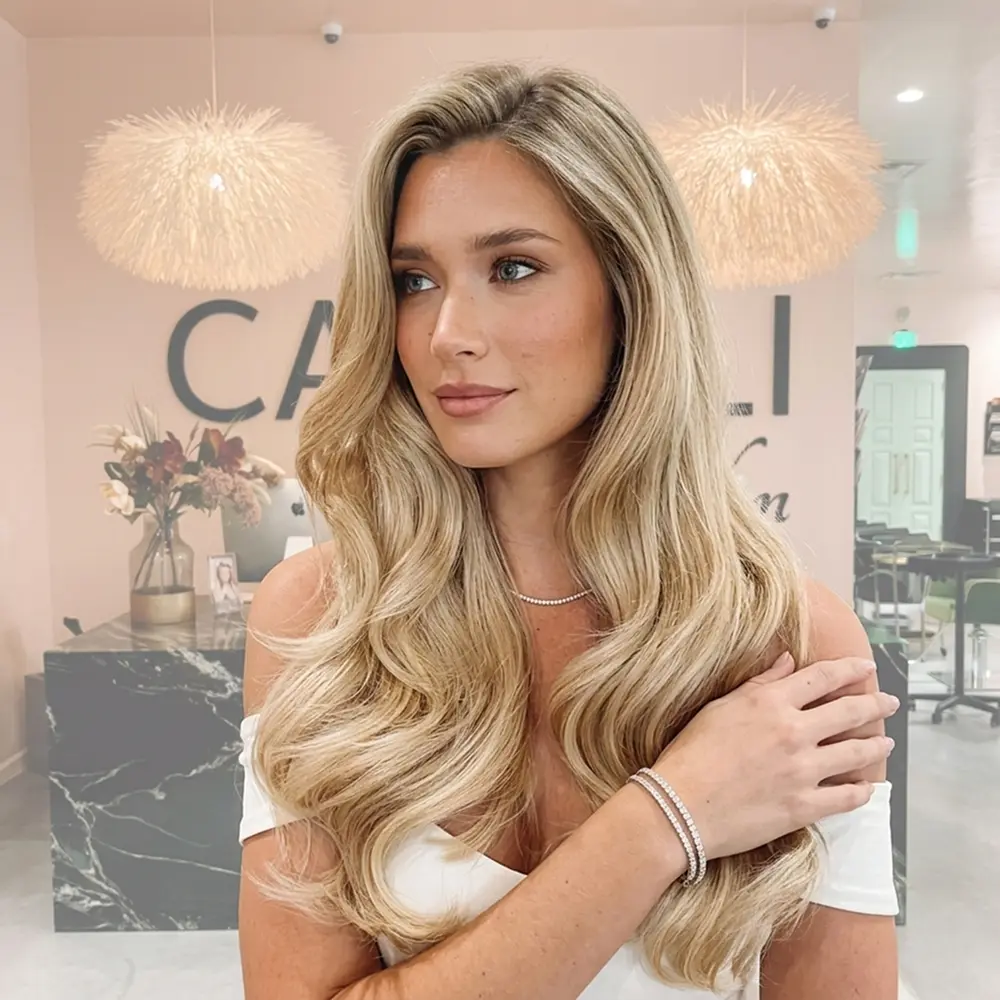
Tape-ins are thin panels of hair with a strip of adhesive at the top. Your stylist places two panels on either side of a thin slice of your own hair, like a sandwich. They lie flat against your head, so they hide well under your own hair, even in a ponytail when they are placed with care.
At each move-up, your stylist removes the panels with a gentle remover, re-tapes them and places them back near the root. Learn more about our tape-in hair extensions.
How Hand-Tied Extensions Work
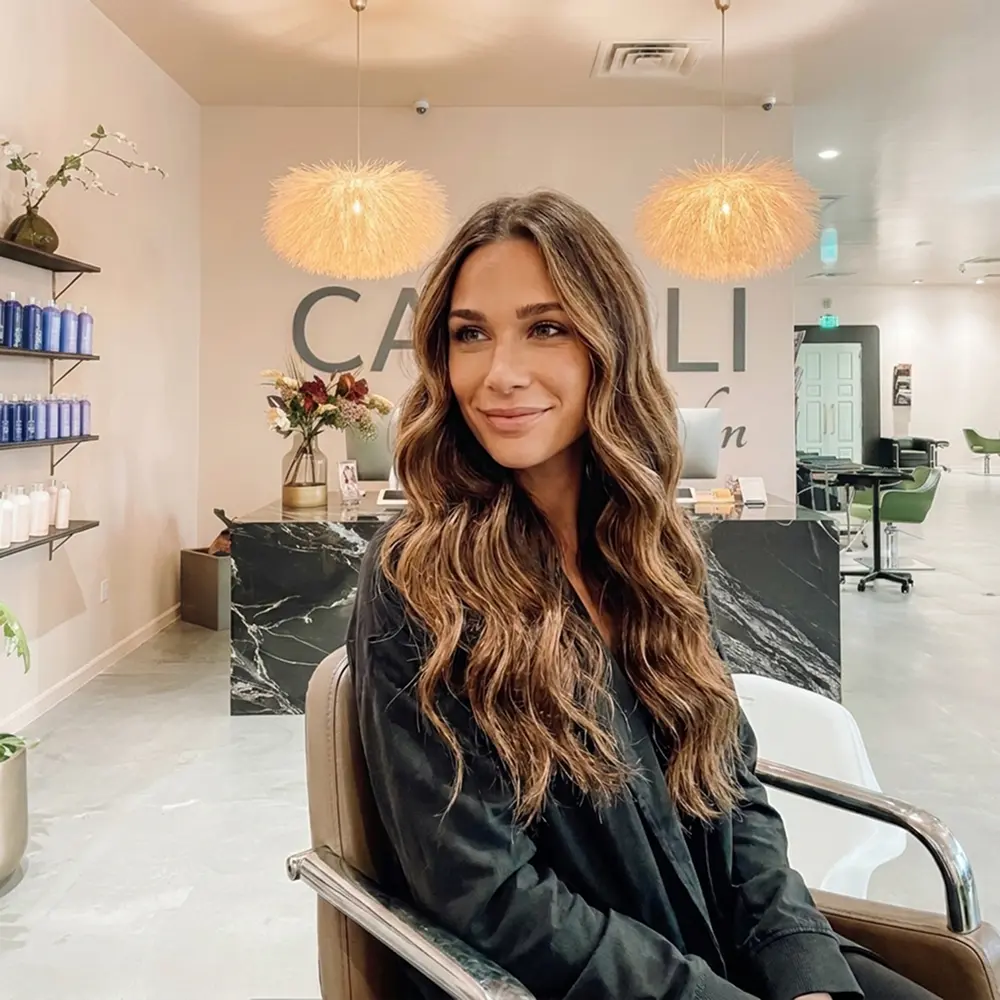
Hand-tied wefts are long, thin curtains of hair. The hair is tied by hand onto a very fine thread, so each weft is light and flexible. Your stylist first creates a row of small beads close to your scalp, then sews the wefts onto that row.
Because one row holds a lot of hair, hand-tied wefts are great for adding real fullness. They use no glue and no heat. At each move-up, the beads are moved back up to the root and the wefts are re-sewn. See our volume weft extensions in Dallas.
Which Is Better for Fine or Thin Hair?
For most people with fine hair, tape-ins are the safer first choice. Each panel spreads its weight across a wide, flat strip, and the panels hide well under thin hair. Hand-tied wefts can work on fine hair too, but you need enough natural hair on top to cover the row of beads.
If your hair is very thin, ask about fewer, lighter pieces. Our guide to hair extensions for thin hair explains what to look for.
Which Is Better for Thick Hair?
Thick hair often blends best with hand-tied wefts. A single row can match the fullness of thick hair without dozens of small pieces. Tape-ins work well on thick hair too, but you may need more panels to see a big change in volume.
Upkeep and Daily Care
Day to day, both methods are cared for in much the same way.
- Use a sulfate-free shampoo and conditioner.
- Keep conditioner and oils off the attachments. This matters most with tape-ins, because oil can loosen the adhesive.
- Brush from the ends up with a loop or soft brush, holding the hair near the root.
- Dry the roots fully after every wash.
- Sleep with your hair in a loose braid or on a silk pillowcase.
- Book your move-ups on time, so nothing tangles at the root.
Your own hair matters too. The American Academy of Dermatology advises having extensions done by a professional and speaking up if they ever hurt or feel tight. Pain is a sign that something is pulling too hard.
How Long Does Each One Last?
Both need a move-up about every 6 to 8 weeks, as your own hair grows and the attachments move down. With good care, quality human hair can often be reused for several rounds before you need fresh hair. Read more on how long hair extensions last, method by method.

How to Choose: A Quick Guide
- Choose tape-ins if your hair is fine, you want a natural boost, or you want the quickest appointment.
- Choose hand-tied wefts if your hair is medium to thick, you want a lot of volume, or you’d rather avoid adhesive.
- Not sure? Some clients do best with a mix, such as wefts at the back and a few tapes around the face.
Want to compare every method, including keratin bonds and clip-ins? Read our guide to the best hair extensions for your hair type. Curious about cost? Our hair extensions cost guide explains what shapes the price.
Tape-In and Hand-Tied Extensions at Capelli Salon
We fit both methods in 100% human hair, color matched and cut in to blend with your own. Every new client starts with a free consultation, so you can see and feel the options before you decide. See our hair extensions in Dallas, or visit us for hair extensions in Frisco or hair extensions in Austin. Before your visit, read how to prepare for your appointment.
Frequently Asked Questions
Which is better, tape-in or hand-tied extensions?
Neither is better for everyone. Tape-ins suit fine to medium hair and are quick to apply. Hand-tied wefts give more volume and use no glue, and they suit medium to thick hair best.
Are tape-in extensions good for thin hair?
Often, yes. Tape-ins lie flat and spread their weight over a wide strip, so they hide well under fine hair. Your stylist will choose a light amount so your own hair is not strained.
Are hand-tied extensions damaging?
Not when they are fitted by a trained stylist, kept at the right weight and moved up on time. They should never hurt. Tell your stylist right away if anything feels tight.
How often do tape-in and hand-tied extensions need a move-up?
Both usually need a move-up about every 6 to 8 weeks, depending on how fast your hair grows.
Can I reuse tape-in or hand-tied extensions?
Often, yes. Good human hair can usually be reused for several rounds. Tape-ins get fresh tape each time, and wefts are re-sewn.
Can I wear a ponytail with extensions?
Yes, with care. Your stylist places the attachments so they hide in most styles and shows you how to wear a ponytail without showing them.
Related reading: Best extensions for your hair type · Extensions for short hair · Human hair extensions

